

The climbing hydrangea is a unique and versatile plant that can bring an elegant, vertical dimension to any garden. Unlike traditional hydrangeas, which are typically bushy shrubs, climbing hydrangeas are vines that can scale walls, fences, trellises, and even trees. Known for their stunning flowers and lush foliage, these hydrangeas are perfect for gardeners looking to add height and visual interest to their landscapes. In this guide, we’ll explore the various types of climbing hydrangeas, including hydrangea petiolaris, hydrangea seemannii, and hydrangea anomala subsp petiolaris, and provide tips on how to care for these beautiful plants.
What is a Climbing Hydrangea?
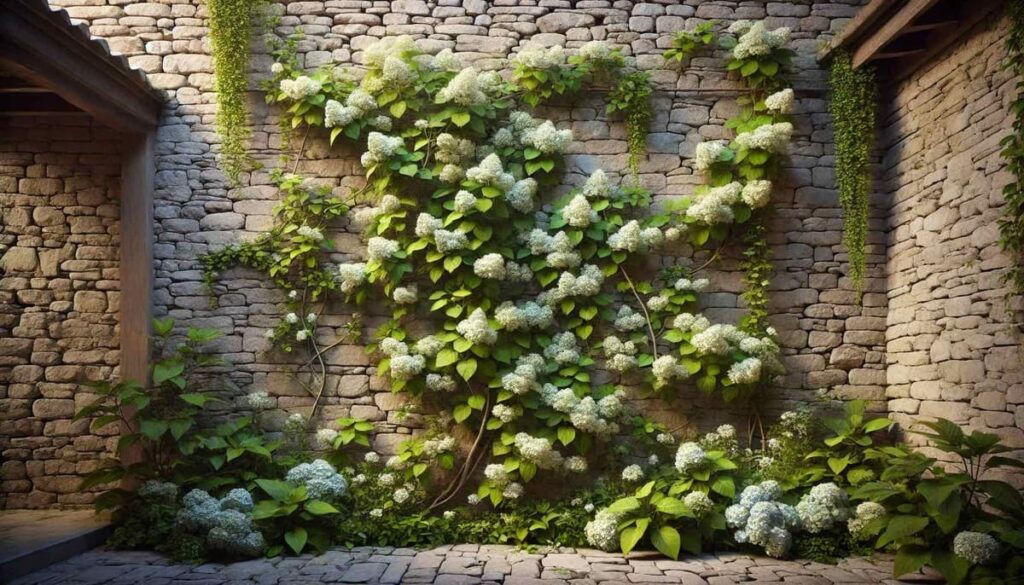
Climbing hydrangeas belong to the species Hydrangea anomala and are known for their unique ability to climb. Their vines attach to surfaces with the help of small aerial roots that act like natural hooks, allowing them to cling to walls and other structures. These hydrangeas bloom in late spring to early summer, producing clusters of delicate, fragrant white flowers that contrast beautifully with their dark green foliage.
Types of Climbing Hydrangea
- Hydrangea Petiolaris (Hydrangea anomala petiolaris): The most common type of climbing hydrangea, Hydrangea anomala petiolaris is a deciduous vine that can grow up to 40 to 60 feet tall. It is known for its large, flat flower clusters, which can be up to 8 inches in diameter. This hydrangea vine is ideal for covering large walls, fences, or even tree trunks, providing a spectacular display throughout the growing season.
- Hydrangea Seemannii: An evergreen climbing hydrangea, Hydrangea seemannii is native to Mexico and offers year-round interest. Unlike the more common deciduous varieties, this evergreen climbing hydrangea retains its glossy green leaves even in winter, adding greenery to your garden during the colder months. The flowers are similar to those of other climbing hydrangeas, with creamy white blooms that appear in summer.

- Hydrangea Anomala Subsp Petiolaris: This subspecies of Hydrangea anomala is very similar to the standard Hydrangea petiolaris but is often more cold-hardy. It thrives in partial shade and well-drained soil, making it suitable for a variety of garden environments. Like other climbing hydrangeas, it requires some support to climb and will attach itself to surfaces with its aerial roots.
How to Grow and Care for Climbing Hydrangea
Growing a climbing hydrangea requires patience, as these plants can take several years to become established. However, once they do, they are relatively low-maintenance and can provide stunning vertical interest in any garden.
- Planting: Choose a location with partial shade and well-drained soil. Climbing hydrangeas prefer moist, fertile soil rich in organic matter. When planting, ensure the base of the vine is a few inches away from the wall or support structure to allow room for root growth.
- Watering: Keep the soil consistently moist, especially during the first few years of growth. Once established, climbing hydrangeas are relatively drought-tolerant but still benefit from regular watering during dry spells.
- Pruning: Prune climbing hydrangeas in late winter or early spring to remove any dead or damaged wood and control growth. This will help maintain the plant’s shape and encourage healthy new growth.
- Fertilization: Apply a balanced, slow-release fertilizer in early spring to promote vigorous growth and abundant blooms. Avoid over-fertilizing, as this can lead to excessive foliage growth at the expense of flowers.
Landscaping with Climbing Hydrangea
Climbing hydrangeas are incredibly versatile and can be used in various landscaping applications. Here are some creative ways to use these vines in your garden:
- Covering Walls and Fences: The dense foliage and attractive flowers of climbing hydrangeas make them ideal for covering unsightly walls or fences. Their aerial roots allow them to cling tightly to surfaces, creating a lush, green tapestry.
- Tree Climber: For a more natural look, allow your climbing hydrangea to grow up a sturdy tree trunk. This creates a beautiful contrast between the tree’s bark and the hydrangea’s flowers and leaves.
- Pergolas and Arbors: Use climbing hydrangeas to create a romantic, shaded walkway by training them to grow over pergolas and arbors. Their cascading blooms provide a stunning focal point in the garden.
- Companion Planting: Pair climbing hydrangeas with other hydrangea varieties, such as the Vanilla Strawberry hydrangea tree, to create a multi-layered and diverse landscape. The striking pink blooms of the Vanilla Strawberry hydrangea tree complement the white flowers of the climbing varieties, adding color contrast and visual interest.
Conclusion
Whether you choose the hardy hydrangea petiolaris or the evergreen beauty of hydrangea seemannii, climbing hydrangeas offer a unique and elegant way to add vertical interest to your garden. With proper care, these hydrangea vines can thrive for many years, providing a stunning backdrop of foliage and flowers. Whether you’re looking to cover a wall, fence, or pergola, climbing hydrangeas are an excellent choice for any gardener seeking to create a lush, green oasis.